Drone Programming Competition/Challenge
Drone Programing
Drone Programming competitions challenge participants to code and control drones to complete complex missions with precision and efficiency. Competitors must design algorithms to navigate obstacles, execute tasks, and adapt to dynamic environments. It’s a captivating blend of coding, robotics, and problem-solving that showcases the power of automation and innovation.
Registration
Drone Programming Competition
Team Roster
ROBOT REALM, 3rd Floor ZEER RANGSIT
CHAMPIONS
Space of Challenge 2025
OFFICIAL ANNOUNCEMENT
Important Announcement Regarding Confirmation of Registration
Dear All Participants,
The Space of Challenge Asia 2025 organizers would like to clarify that:
Once a team has successfully registered and confirmed their information via the registration form above, their registration is final and cannot be cancelled under any circumstances. This is to ensure the efficient organization of the event, including the allocation of equipment, competition space, and schedule, in accordance with established standards.If you have provided incomplete information or wish to make any corrections, please contact the team for assistance within the specified timeframe. However, withdrawals or cancellations of registration will not be processed.
The team would like to thank everyone for their understanding and cooperation in these terms and conditions, and we sincerely look forward to welcoming you to this year’s competition.
Categories
Obstacle Challenge (Team) 1-3 Members
- Open Enrollment (Open)
Rules
Team Rules
Each team will have 1-3 members for Obstacle.
This category is open to the following age groups:
● Everyone (No age limit)
Students need not be from the same school. However, all the members of a team must be in the same
age group to qualify.
Competition Format
The Drone Programming Competition will be held on-site. Participants will be required to write code to program a drone to successfully execute pre-defined missions.
Participants must write code for the drone to execute pre-defined missions. Each mission will incorporate a combination of various sub-tasks, including obstacles within the mission-assigned area.
Teams should maintain courteous conduct and demonstrate respect towards other teams, coaches, judges, and event organizers. Teams must strictly adhere to the competition rules to ensure fair play.
Teams must write the code independently.
Coaches must provide full support and assistance in the event that participants encounter difficulties or have questions prior to the mission execution.
Coaches are strictly prohibited from touching or modifying the drone’s program code.
During mission execution, coaches/mentors are forbidden from communicating with their team.
Should any rule be violated, the judges reserve the right to disqualify the team, or team members may be interviewed to gather additional information regarding the potential rule violation.
Mission Run Format
Teams will be separated into designated areas and will only be permitted to adjust the drone’s structure or code during Practice Times. If a team wishes to conduct a test flight, they must queue with their drone (including the controller) and must remove their shoes before entering the competition field.
Flying is strictly allowed only within the designated flight area. Teams that violate this rule may be disqualified from the competition at the discretion of the judging panel.
All participants are responsible for the flight safety of their drone throughout the competition. The organizers reserve the right to order any team’s drone to cease flying.
Teams must prepare all necessary equipment, such as routers, laptops, chargers, drones, spare batteries, and various accessories for the competition.
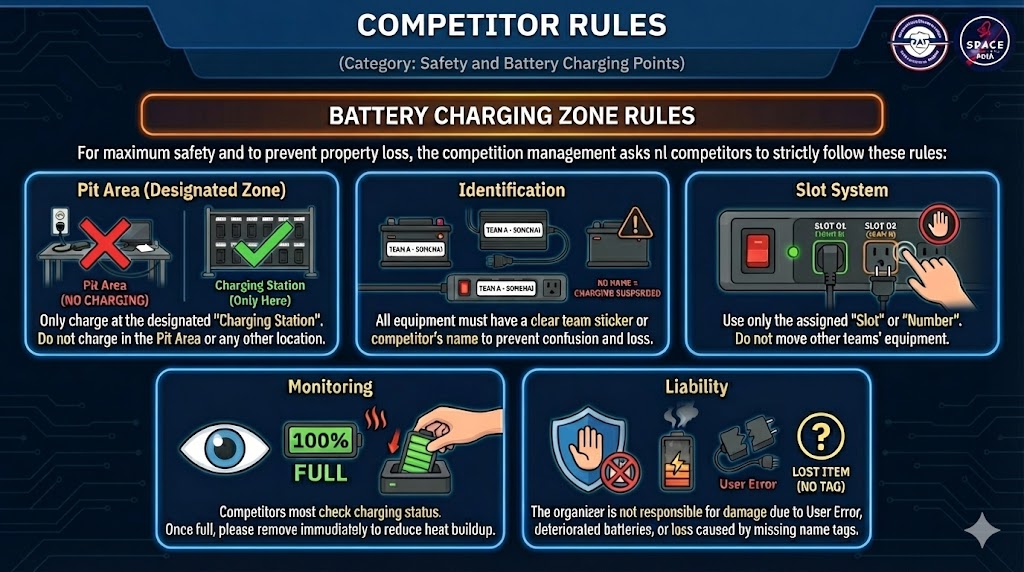
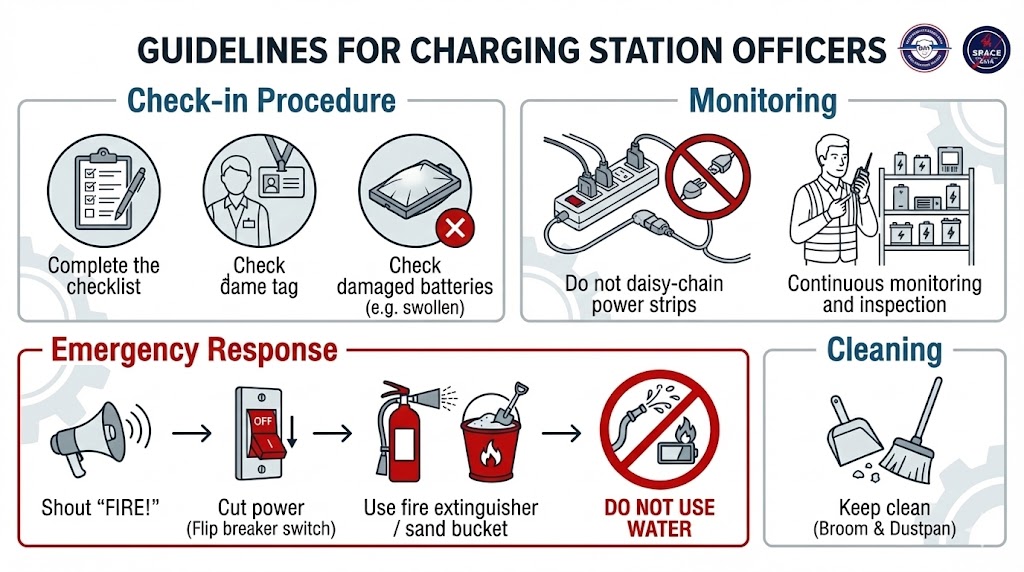
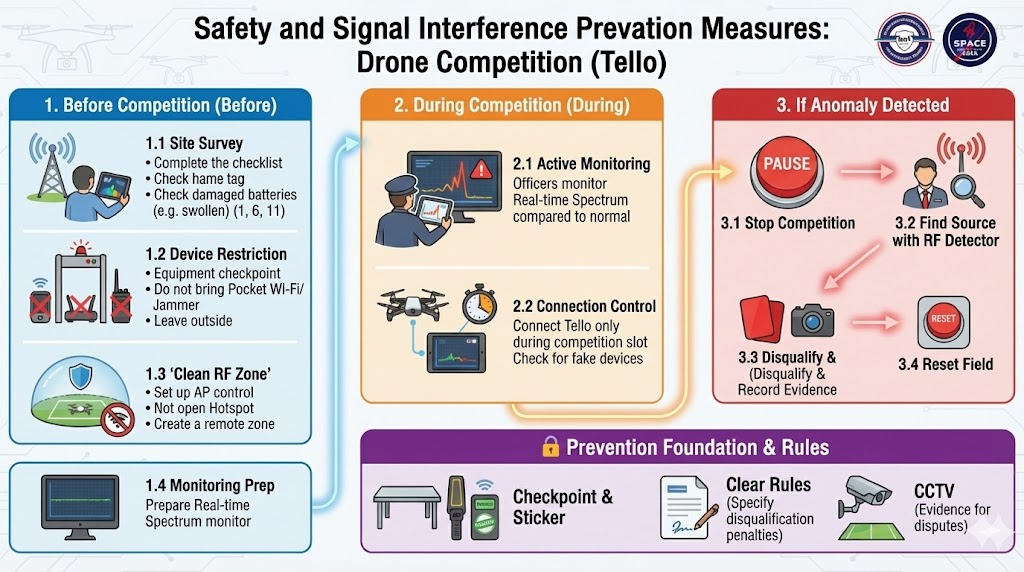
Furthermore, teams are responsible for checking the stability of their own Wi-Fi signal during the setup period. In the event of a Flyaway or signal loss during flight, it will be considered the team’s responsibility.Battery charging is permitted inside the competition hall, but only standard, certified battery models may be used.
The transfer of any objects, items, digital files, or other media between the designated team area and the area outside the containment zone is strictly prohibited.
The organizers will not be held responsible for any damage to or loss of drones and related equipment throughout the entire duration of the competition.
Drone Specification
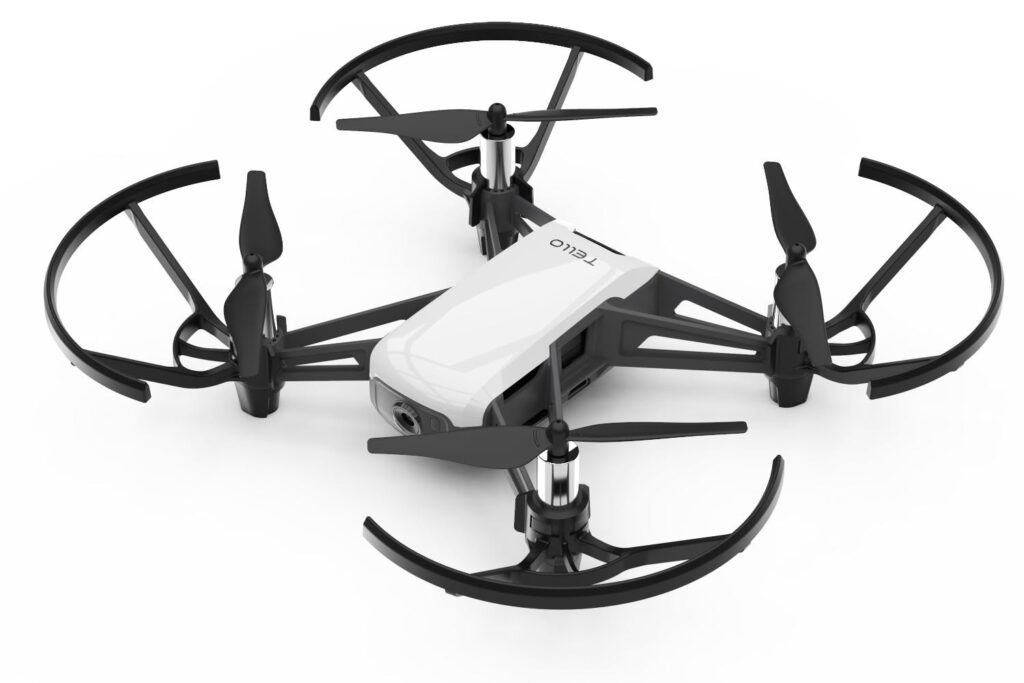
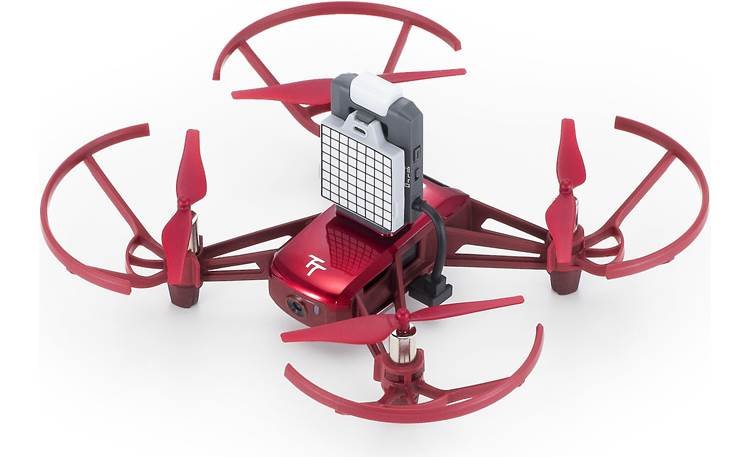
The drones used in the Drone Programming competition must be of the following models:
- DJI Tello
- DJI TelloEDU
- DJI ROBOMASTER TT

Playfield Fomat
Field Size: 5 meters (width) x 5 meters (length)
Flight Ceiling Height: Maximum 240 cm
Tables: 80 cm x 80 cm
Channel Spacing (between structures/gates): Approximately 20-30 cm
Note: The judges will finalize the actual dimensions on the competition day. Participants are permitted to “measure the actual distance” only during the Practice Time to adjust the distance values in the code variables.
Obstacles
Dimensions: 60 cm x 60 cm x 80 cm
Can be stacked vertically up to a maximum height of 240 cm.
Field Components
Take-off Point
Landing Point
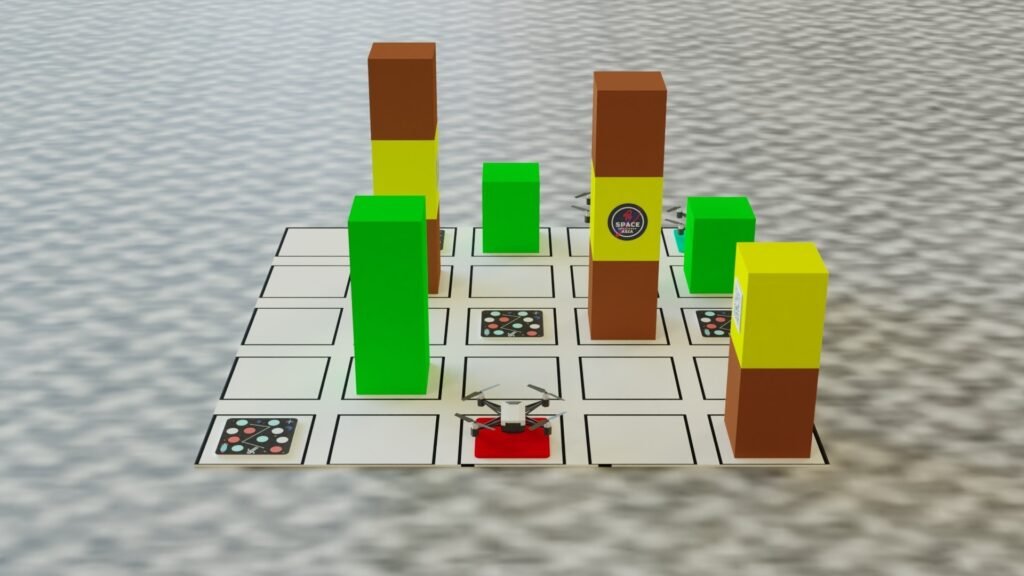
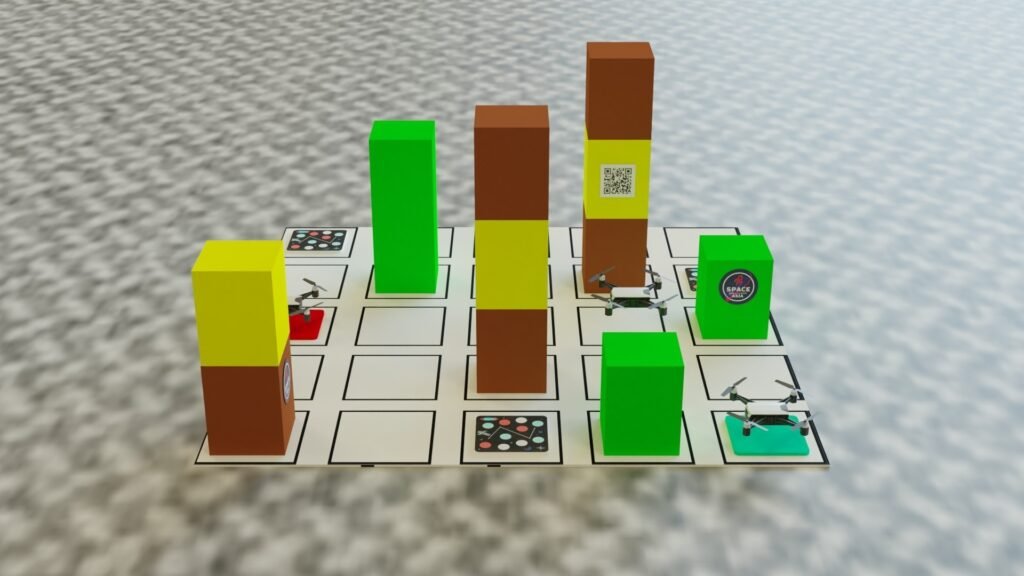
Obstacles (as per 3D model)
QR Code
Photography Point
Mission Pad
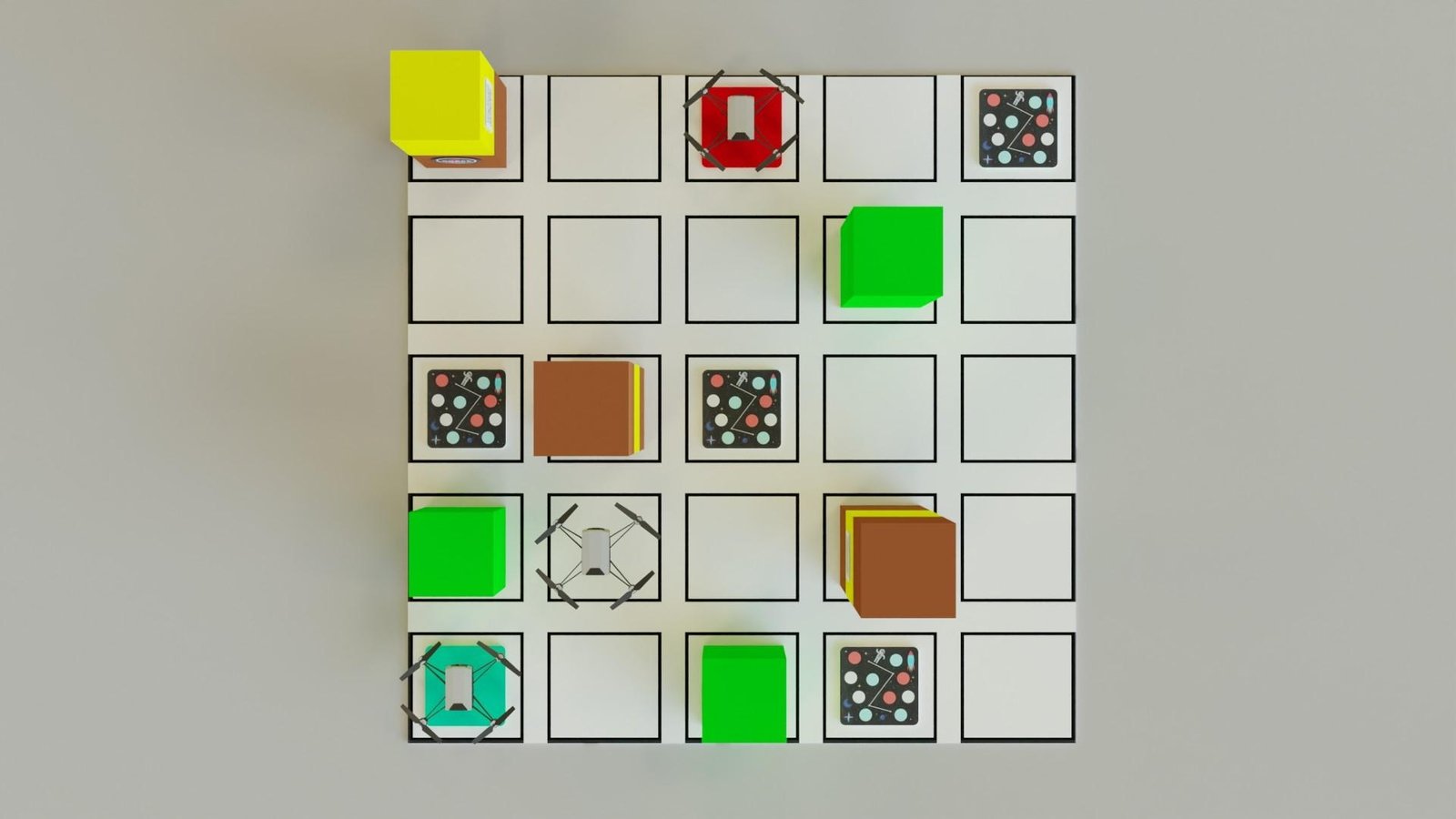
Obstacle Challenge Playfield
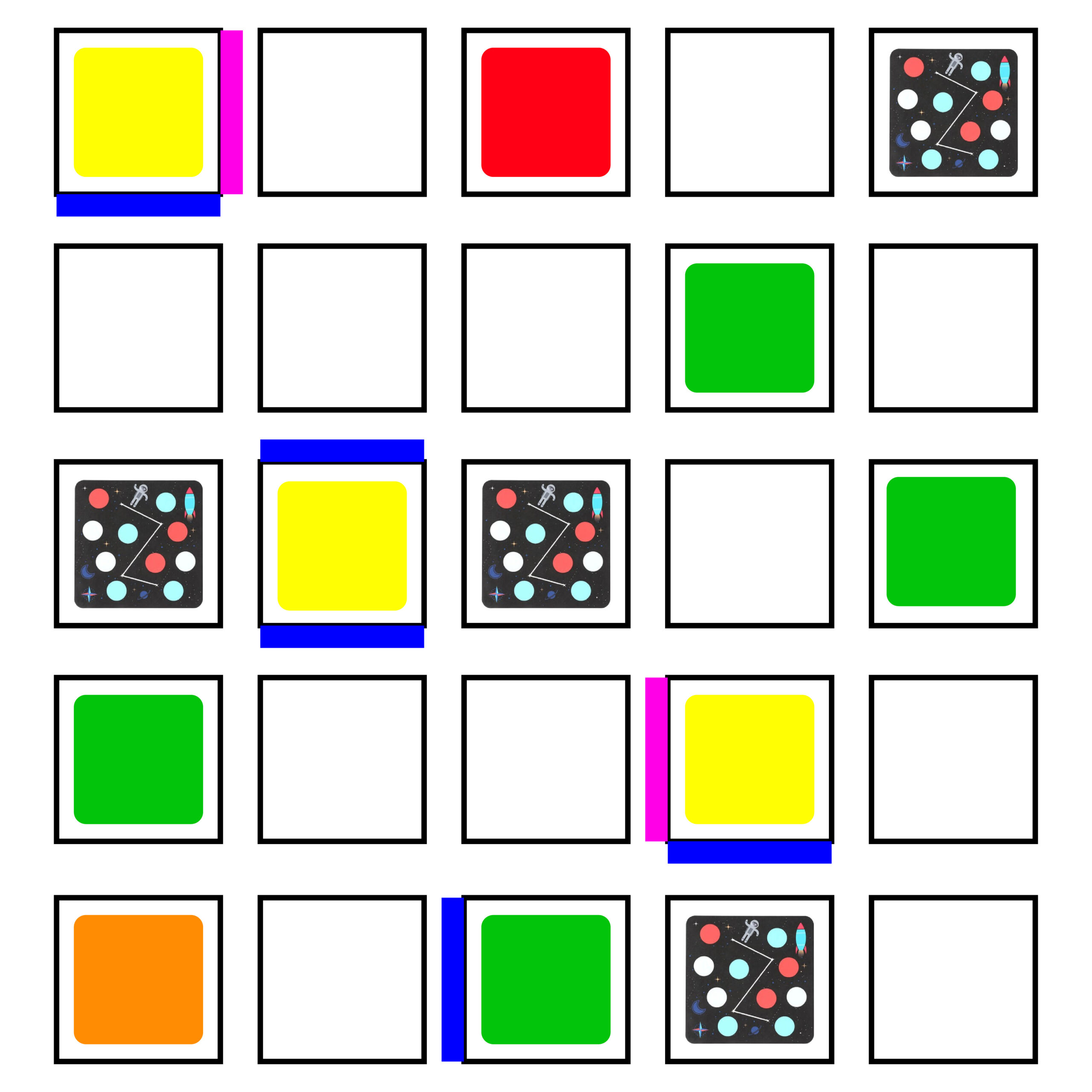
Orange is Start Zone (Take Off)
Red is Landing Zone
Yellow is Obstacle (Following on 3D Playfield)
Blue is QR Code
Pink is Aerial Photography Zone
Green is Detect and Record Zone (Downward TOF Distance Sensing)
Obstacle Block
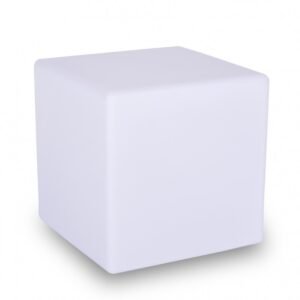
- Size of the obstacle is 60cm(Breadth) by 60cm(Breadth) by 80cm(height).
- Obstacle can be stacked on top of another obstacle
- Maximum height of obstacle is 240cm
Obstacle 3D Playfield
Scoring
Obstacle Challenge
| Mission | Point | Maximum Score |
|---|---|---|
|
Consolidate and display the total sum Mission Pad value
|
10 |
50 |
|
Identify QR Code in a single program |
10 |
50 |
|
Take Aerial photography of one location in a single program |
20 |
40 |
|
Land on specified area |
30 |
30 |
|
Explain the code |
20 |
20 |
|
Complete assigned missions within a single program |
10 |
10 |
| Total score | 200 | |||
|---|---|---|---|---|
Mission Attempt
Mission Execution
Each team is permitted only one attempt (Run) to complete the mission.
The time measurement commences when the drone takes off.
The mission terminates when:
The 10-minute time limit is reached.
The drone or the participating team violates the rules.
The team shouts “STOP” and the drone comes to a complete standstill.
A crash or landing on the ground occurs (the mission ends immediately; points will be calculated based on progress up to that moment).
Annex Rules and Further Clarification
To ensure clarity in judging and execution, the following rules are further elaborated:
1. Definition of Collision (Crash Definition)
Crash: Refers to an impact with an obstacle resulting in the drone falling to the ground, the propellers ceasing to spin, or the drone becoming stuck to an obstacle (rendering the drone unable to continue operation). This will result in immediate mission termination in all cases.
Touch: Refers to contact with an obstacle, where the drone is still immediately able to continue the mission without falling. Flying is permitted to continue.
2. Summation Display (Score Results Display)
For DJI Tello / Tello EDU: The numerical total display must be shown clearly to the judges via the computer screen (Console Log / Print Output) at the time the calculation is completed or the mission is terminated.
If the judges cannot clearly see the numerical answer, no points will be awarded for this specific component.
3. Photo Verification (Image Inspection)
After the mission is completed, teams will have 5 minutes to display the captured image(s) for the judges’ inspection (via the computer screen).
Failure to retrieve and display the image(s) within the stipulated time will result in no points being awarded for the photography component.
4. Code Execution (Run)
“Running the code only once” signifies pressing the Start/Run button on the computer only one time It is strictly forbidden to insert manual commands (Manual Control) during the flight. If detected, the team will be immediately disqualified.
Scoring Submissions
The decisions and scoring rendered by the judges are final and not subject to appeal.
Awards
Prizes will be allocated based on the ranking of the competing teams. Certificates will be awarded to the winners of each category by Space Challenge Asia.
Rules & Regulations regarding Discipline, Conduct, and Penalties
To ensure the competition proceeds smoothly, fairly, and with the spirit of sportsmanship, the organizing committee hereby declares a “Zero Tolerance Policy” as follows:
Article 1. Adjudication Authority and Non-Protest Policy
1.1 Final Decision: The decisions made by the Judges and the Tournament Director are absolute and final in all cases. 1.2 No Protests: The organizers do not accept protests, appeals, or requests to overturn competition results under any circumstances. 1.3 No Dissent: Competitors, team staff, and guardians are prohibited from exhibiting aggressive behavior, arguing, or disobeying the orders of field officials. Any violation will result in immediate removal from the competition area.
Article 2. Conduct and Social Media Policy
2.1 No Negative Posting: Competitors and team staff are strictly prohibited from publishing content, images, or videos on social media (Facebook, TikTok, Line, etc.) that attack, verbally abuse, defame, or undermine the credibility of the competition or the committee. 2.2 Collective Responsibility: Competitors are held responsible for the actions of their followers and supporters. If related individuals post damaging content, the competing team will be held jointly liable. 2.3 On-Field Etiquette: Competitors must respect their opponents. Shouting, distracting behavior (especially in Drone Programming and Flight Sim categories), or any unsportsmanlike conduct is strictly prohibited.
Article 3. Disciplinary Actions
Any violation of the rules in Article 1 or Article 2 will result in the committee taking severe disciplinary actions as follows:
Immediate Disqualification: Immediate revocation of competition rights upon detection of the offense (applicable both during and after the match).
Forfeiture of Awards: If the offender has already received an award, the organizers reserve the right to reclaim all trophies and medals, and withhold all prize money in all cases.
Blacklisting: The offender will be blacklisted and banned from participating in future events organized by the committee.
Note: By registering for this competition, competitors acknowledge and accept these rules and regulations without objection.
FAQs
1-3 members for Obstacle Challenge
Drones must be pre-programmed
It is used to identify, for example, when the drone scans the QR code. The words should then appear on the screen.
For Obstacle only 1 drone can be used.
For both Obstacle. participants must use one of the following drones:
- DJI Tello
- DJI TelloEDU
- DJI Robomaster TT
There is no any restriction on the programming languages.
 English
  Thai
Thai